



Turkish Slang Words: Kanka, Aynen, Abi and When to Use Them
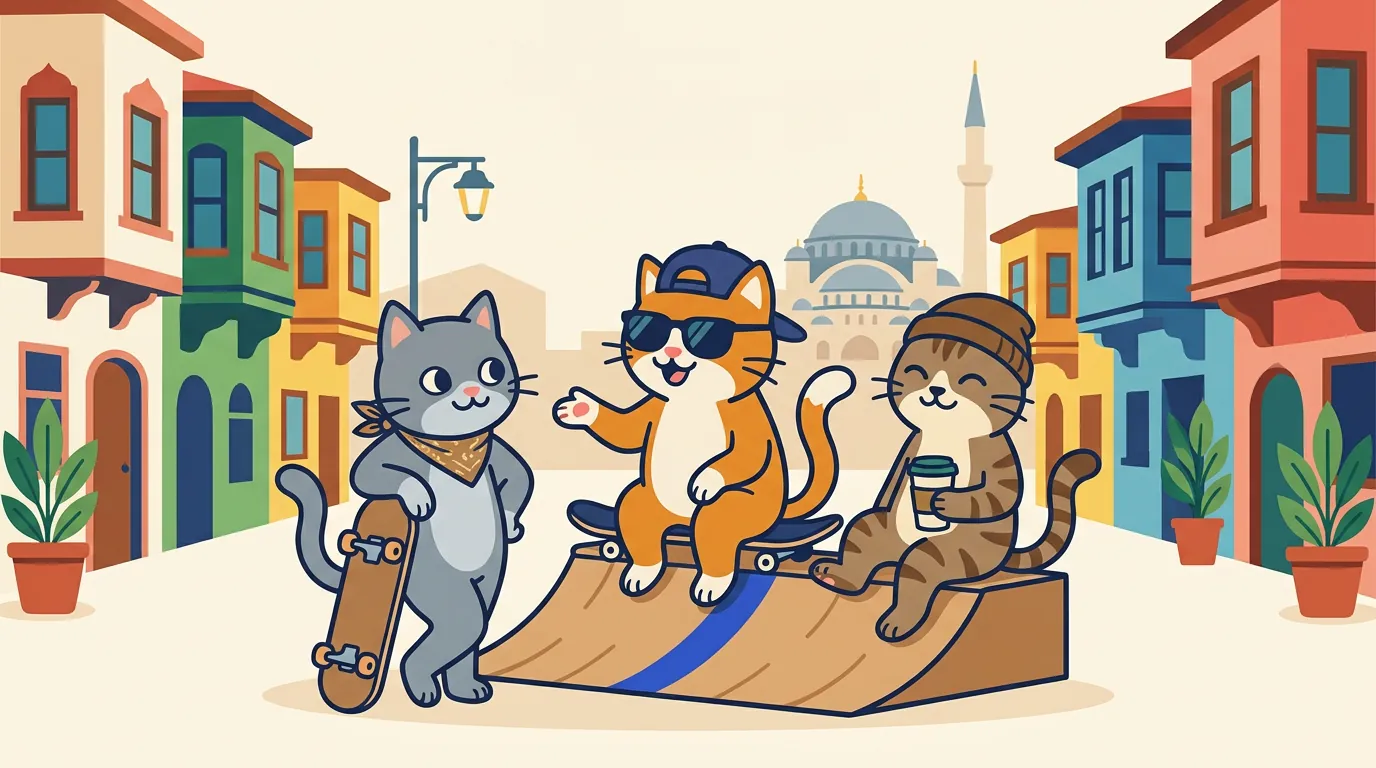
The Turkish slang words you'll hear most are kanka (kahn-kah, "buddy"), aynen (eye-nen, "exactly"), abi and abla (ah-bee, ahb-lah, "big brother" and "big sister") and yok artık! (yok ar-tuhk, "no way!"). They're all casual, and a few are strictly for friends.
Slang in Turkish is mostly about register, the level of formality a word carries. Abi is fine with a shopkeeper. Kanka to your boss is a mistake. This guide sorts the common words by how casual they are, shows how people reply, and covers the words you should recognise but never use. If Turkish letters like ı and ş are still new, start with the Turkish alphabet and pronunciation guide.
Common Turkish slang by register
| Slang | Pronunciation | Register | Meaning |
|---|---|---|---|
| abi / abla | ah-bee / ahb-lah | casual, polite | big brother / big sister; "mate", "miss" |
| hocam | hoh-jahm | casual, polite | "my teacher"; respectful "hey you" |
| aynen | eye-nen | casual | exactly, yep |
| valla | vahl-lah | casual | honestly, I swear |
| vay be | vye beh | casual | wow, well I never |
| yok artık! | yok ar-tuhk | casual | no way! |
| hadi ya! | hah-dee yah | casual | really? come on! |
| baya | bah-yah | casual | quite, really (from bayağı) |
| harbi | har-bee | slang | for real, seriously |
| efsane | ef-sah-neh | slang | legendary, amazing |
| kafa dengi | kah-fah den-gee | slang | someone on your wavelength |
| kanka | kahn-kah | slang, young | buddy, bro |
| moruk | moh-rook | slang, friends only | old man, dude |
| eyvallah | ey-vahl-lah | slang, leans masculine | cheers, thanks, fine |
| kafayı yemek | kah-fah-yuh yeh-mek | slang | to lose it, go crazy |
Abi and abla are the most useful words on this list. Abi is the spoken form of ağabey (older brother), and the TDK's Güncel Türkçe Sözlük lists it as its own entry. People use both to address strangers a little older than themselves: the man at the market stall, the bus driver, a woman in a shop. It sounds friendly and respectful at the same time.
Hocam works the same way. Literally "my teacher", it's a polite, warm way to address someone whose name you don't know, especially at a university or in an office.
When to use each word
Aynen, valla, vay be and yok artık are safe in almost any relaxed conversation. You can use them with coworkers, neighbours and your partner's family once the ice is broken. None of them is rude.
Kanka, harbi and efsane belong to friends of your own age. Kanka is usually explained as a shortening of kan kardeş, "blood brother", and it's very common among teenagers and people in their twenties. From a learner it sounds friendly and a bit funny. With anyone older or more senior, it sounds like you've misread the situation.
Be careful with moruk and eyvallah. Moruk teases someone for being old, so it only works between close friends. Eyvallah is a casual thanks that the TDK also records as "goodbye" and "fine, I accept". It sounds masculine and street-level. Our guide on how to say thank you in Turkish has the neutral options.
Keep slang out of anything written or official. In an email, at a bank, with a landlord or in an exam, use standard Turkish and siz. The spoken vs written Turkish guide explains how far casual speech can go.
How to reply to Turkish slang
Slang usually gets slang back. These pairs come up all the time.
| They say | You reply | Meaning |
|---|---|---|
| Naber kanka? | İyi kanka, sen? | What's up, buddy? / Good, you? |
| Çok yoruldum ya. | Aynen, ben de. | I'm so tired. / Same here. |
| Ali evleniyormuş! | Yok artık! / Hadi ya! | Ali's getting married! / No way! |
| Sağ ol abi. | Eyvallah. / Ne demek. | Thanks. / Don't mention it. |
| Harbi mi? | Harbi valla. | For real? / For real, I swear. |
Aynen is the easiest reply to learn. It agrees with whatever was said, and you can stretch it to aynen öyle ("exactly that") for emphasis. For more everyday replies, see our Turkish greetings and everyday phrases.
Words to avoid
Some words you'll hear constantly are not safe to copy.
- Lan is a filler like "man" or "dude", heard all the time between male friends. With anyone else it sounds aggressive or vulgar, and from a foreigner it can start an argument. Learn to recognise it and leave it there.
- Oha means "whoa!" The TDK records it first as a call to stop cattle. It's fine among young friends but rude in front of older people.
- Kıl (literally "hair") means a difficult, bad-tempered person, and calling someone that is a mild insult.
- Curses such as Allah belanı versin ("may God give you trouble") are serious, even when someone shouts them in traffic.
- Swearing. Most Turkish swear words insult someone's mother, sister or family honour. They're far stronger than their English equivalents feel to a learner, and saying one even as a joke can end a friendship. We don't list them here. If you hear a word you don't know in an angry voice, don't repeat it. Ask a Turkish friend or your teacher privately.
A safe rule is to understand every word and use only the mild ones. Being too polite costs a learner nothing. One misplaced swear word can do real damage.
Pronunciation tips for English speakers
- The undotted ı in artık and kafayı is a short, relaxed vowel, close to the second vowel in "roses". Saying "ee" there sounds foreign.
- Double consonants are held. Valla and eyvallah have a long l, as in "full lot".
- The ay in aynen and vay rhymes with "eye", not with "day".
- c is "j": hocam is hoh-jahm.
- Stress usually falls near the end, so kanKA, efsaNE. In yok artık! the whole phrase rises in surprise.
Common mistakes
- Calling an older person kanka. Use abi, abla or hocam instead.
- Using lan to sound fluent. To most listeners it just sounds rude.
- Writing slang in formal messages. Aynen in a work email reads as careless.
- Mixing abi with siz awkwardly. It works (Abi, kaç lira?), but with an official or an elderly person, beyefendi (sir) and hanımefendi (madam) are safer.
- Taking kafayı yemek literally. It means you're going crazy from stress, not eating anything. The TDK defines it as falling into a slump from exhaustion.
Two short dialogues
At a market stall:
- You: Abi, domatesin kilosu kaç?
- Seller: Kırk lira abla, çok taze.
- You: Valla güzel görünüyor. Bir kilo alayım.
Prices come fast at a market. Our guide to Turkish numbers, time and prices helps you catch them.
Between friends:
- Emre: Kanka, sınavı geçtim!
- You: Yok artık! Harbi mi?
- Emre: Harbi valla. Akşam kutlayalım mı?
- You: Aynen, efsane olur.
Once slang feels comfortable, the next layer is idioms. Our guide to Turkish proverbs and idioms covers the sayings older speakers love.
Frequently asked questions
What does kanka mean in Turkish?
Kanka means "buddy" or "bro". It's casual slang among friends, mostly young people, and works for both men and women.
Is abi slang?
Abi is the everyday spoken form of ağabey, "older brother", and it's in the TDK dictionary. Using it with strangers is casual but polite.
What does aynen mean?
Aynen means "exactly" or "yep". It's the most common way to agree in casual speech.
Is lan a bad word?
It isn't a swear word, but it's rough. Between close male friends it's normal. Otherwise it can sound aggressive, so learners should avoid it.
The hard part of slang is knowing where the line between friendly and rude sits, and that's easiest to learn by asking a native speaker about the words you've actually heard. Bring your list to a free trial lesson with Ceylan, who can explain in English. If you'd like a level estimate first, take the free level test.
 Everyday Turkish100 Common Turkish Words, With Pronunciation100 useful Turkish words in themed tables: basics, people, time, food, places, 20 key verbs and adjectives, with pronunciation and common mistakes.
 Everyday TurkishDays of the Week and Months in Turkish, With SoundThe seven Turkish days (Pazartesi to Pazar) and twelve months (Ocak to Aralık) with pronunciation, seasons, how to say dates, and 'on Monday'.
 Everyday TurkishHello in Turkish: Merhaba Meaning, Selam and RepliesHello in Turkish is merhaba (mehr-hah-bah), a greeting from Arabic. Learn selam, günaydın and iyi günler, formal vs casual use, and how to reply.
 Everyday TurkishHow to Say Thank You in Turkish, and How to ReplyThank you in Turkish is teşekkür ederim (teh-shek-kewr eh-deh-rim). Also teşekkürler, sağ ol and eyvallah, and how to reply with rica ederim.
 Everyday TurkishI Love You in Turkish: Seni Seviyorum and Love WordsI love you in Turkish is seni seviyorum (seh-nee seh-vee-yoh-room). Learn how to reply, terms of endearment like canım and aşkım, and romantic phrases.
 Everyday TurkishSpoken Turkish vs Written Turkish: How People Really TalkWhy street Turkish sounds unlike your textbook: contractions like napıyon and geliyom, dropped sounds, fillers like yani and şey, and when to avoid them.