





Spoken Turkish vs Written Turkish: How People Really Talk
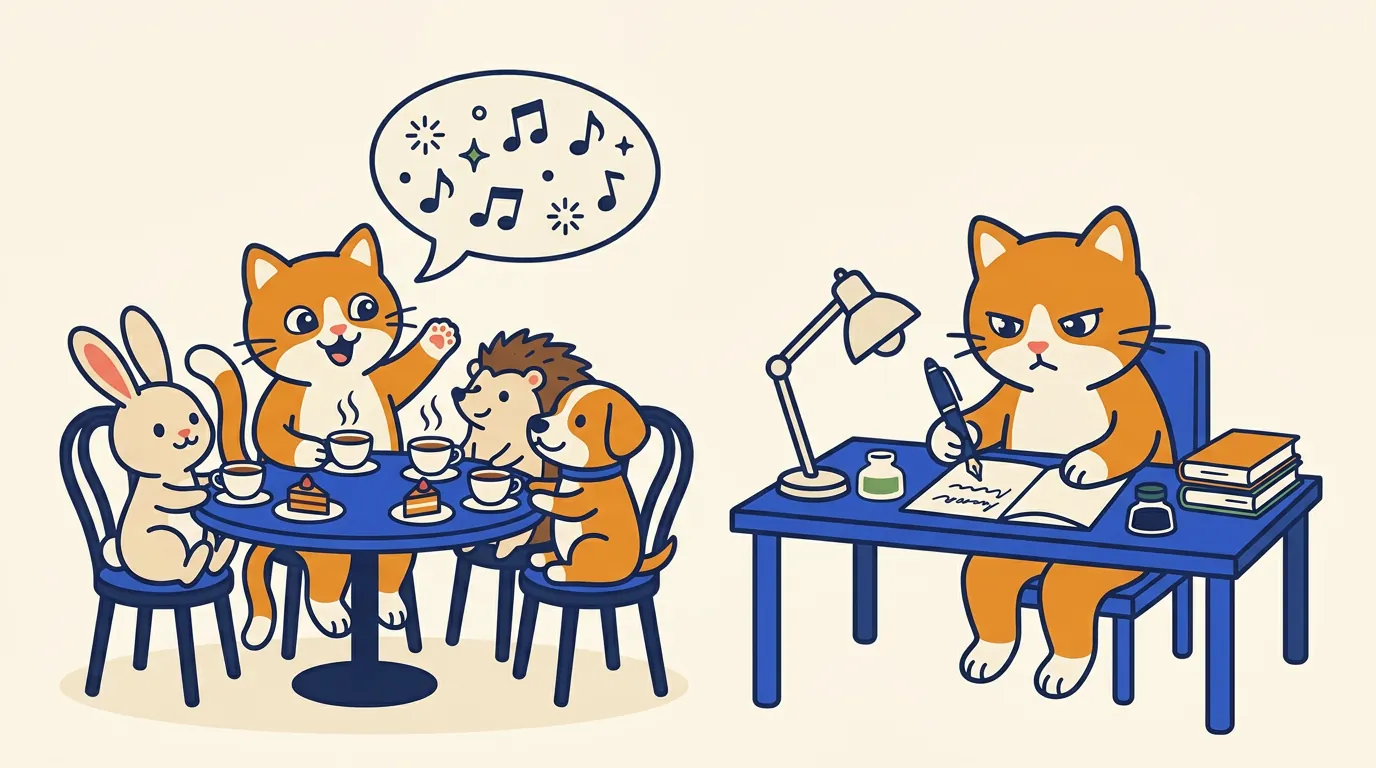
The difference between spoken and written Turkish is mostly in pronunciation. The grammar is the same. People squeeze common verb forms together (ne yapıyorsun becomes napıyon), drop the r of -yor (geliyorum becomes geliyom), shorten words like bir to bi, and pad their sentences with fillers such as yani, şey and işte. Your textbook teaches the full written forms, and you should keep writing those. To understand people in the street, though, you have to learn how those forms get shortened in speech.
Almost every colloquial form below is a predictable shortening of a word you already know. Learn the patterns and you'll get further than you would with a slang list. If you can't yet read Turkish aloud with confidence, start with our guide to the Turkish alphabet and pronunciation.
Why textbook Turkish sounds different from the street
Textbooks and exams follow the standard written language. Its reference point is the Turkish Language Association, the TDK, which publishes the official spelling guide and the Güncel Türkçe Sözlük dictionary. That's the Turkish you write in an email, read in a newspaper and hear from a news presenter.
In fast, relaxed conversation, frequent words lose syllables, and some consonants are barely pronounced or not pronounced at all. The suffixes, the word order and the vowel harmony are all still there underneath.
A learner who reads newspapers comfortably can still freeze when a friend asks "Napcan akşam?" (What are you doing tonight?)
Verb contractions: the biggest gap
Most of what confuses learners comes from a handful of verb forms that people use dozens of times a day. If you're still sorting out which tense is which, read our guide to -iyor, -ir and -ecek first, because the spoken forms below are shortened versions of those tenses.
The present continuous loses its r
The suffix -iyor drops its r in casual speech when another sound follows. Geliyorum becomes geliyom, and biliyor musun becomes biliyo musun.
| Written | Spoken | Meaning |
|---|---|---|
| geliyorum | geliyom | I'm coming |
| bilmiyorum | bilmiyom | I don't know |
| geliyor musun? | geliyo musun? | are you coming? |
| gidiyoruz | gidiyoz | we're going |
| ne diyorsun? | ne diyon? | what are you saying? |
| anlıyor musun? | anlıyo musun? | do you understand? |
The second-person form has two spoken versions. Geliyorsun can become geliyosun, or in more casual speech geliyon. The -on ending sounds very informal, and you'll hear it mostly among friends and young people.
"Ne yapıyorsun?" in all its forms
Ne yapmak (to do what) merges into one word so often that it deserves its own table. Ne + yap- regularly shrinks to nap-, and every tense of yapmak can follow.
| Written | Spoken | Meaning |
|---|---|---|
| ne yapıyorsun? | napıyosun? / napıyon? | what are you doing? |
| ne yapacaksın? | napcan? / napacan? | what are you going to do? |
| ne yapalım? | napalım? | what shall we do? |
| ne yapayım? | napıyım? / napim? | what am I supposed to do? |
| ne oldu? | n'oldu? | what happened? |
Napim? often carries a shrug: "what can I do?" or "so what?" Context tells you which.
The future tense shrinks too
The future suffix -ecek / -acak loses vowels and consonants in speech, especially in the first and second person.
| Written | Spoken | Meaning |
|---|---|---|
| geleceğim | gelicem / gelcem | I'll come |
| yapacağız | yapcaz / yapıcaz | we'll do it |
| geleceksin | gelceksin / gelicen | you'll come |
| gelmeyecek | gelmicek | he/she won't come |
| ne zaman gideceksin? | ne zaman gidicen? | when are you going? |
The -cen and -can endings (gelicen, napcan) match the -on ending of napıyon: they sound friendly and very casual.
Dropped and blended sounds
Beyond verbs, a few sound changes show up everywhere.
- Bir becomes bi: bir şey is bi şey, bir dakika is bi dakka.
- The middle vowel of place words disappears: nerede is nerde, burada is burda, orada is orda.
- Böyle and şöyle lose their y and come out as böle and şöle.
- Değil mi becomes di mi, so Güzel, değil mi? (Nice, isn't it?) is often just Güzel di mi?
- Ğ lengthens the vowel before it, as the TDK spelling guide describes, so dağ sounds like "daa" and öğretmen like "ööretmen". This one is standard pronunciation as well as casual speech.
Ağabey (older brother) is almost always said, and often written, as abi. The TDK dictionary lists abi as an entry of its own. Expect to hear it everywhere, from shop staff to strangers asking for directions.
Fillers: yani, şey, hani, işte
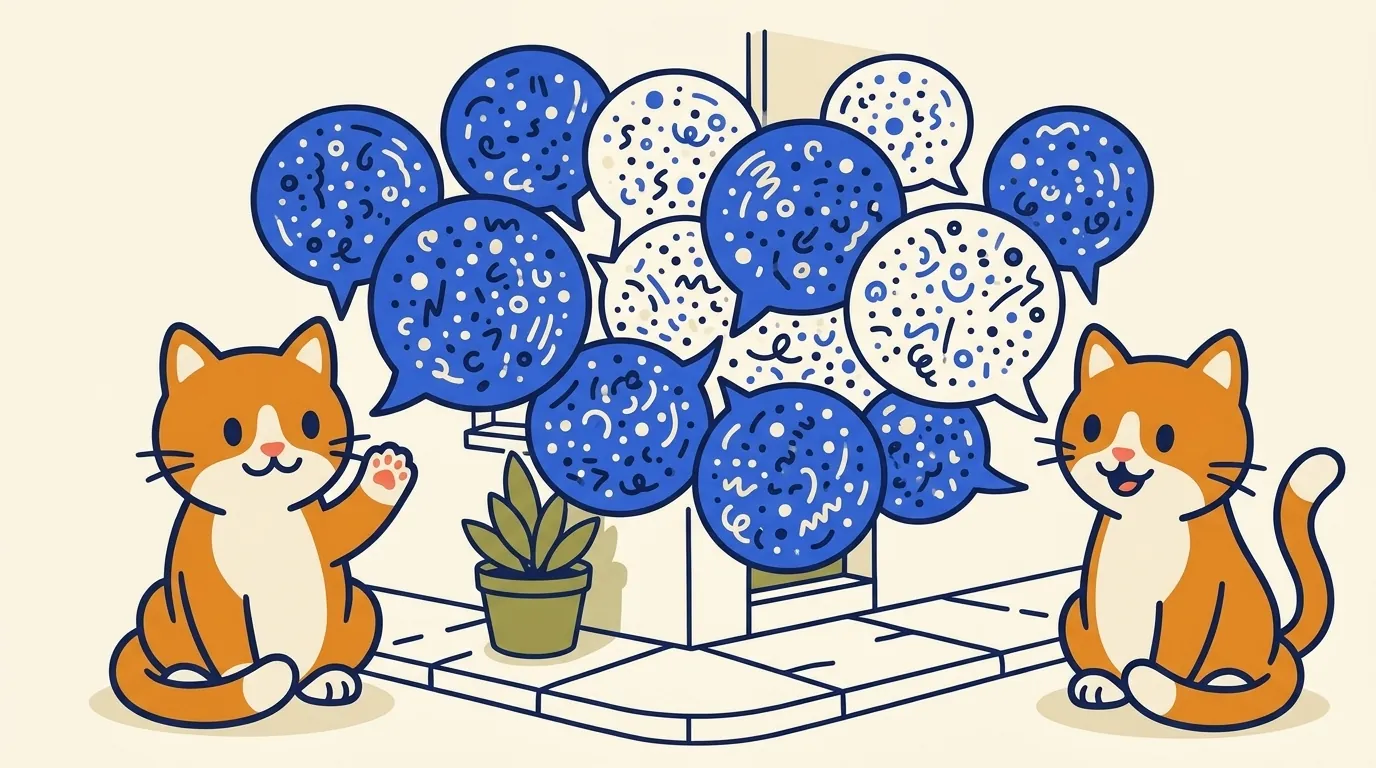
Fillers buy the speaker time, soften what they're saying, or check that you're following. Textbooks barely mention them, and you'll hear them constantly. Drop a few into your own speech and you'll sound much less like a textbook.
| Filler | Rough meaning | How it's used |
|---|---|---|
| yani | I mean, so | rephrasing or explaining: Yani, gelmiyor. (So, he's not coming.) |
| şey | um, thingy | searching for a word: Şey… adı neydi? (Um… what was its name?) |
| hani | you know, remember | pointing to shared knowledge: Hani o kafe var ya… (You know that café…) |
| işte | well, you see | summing up or pointing: İşte böyle. (That's how it is.) |
| ya | softener at the end | emotion or emphasis: Çok güzel ya! (It's so nice!) |
| falan | and stuff, or so | vagueness: Saat beş falan. (Five-ish.) |
| aslında | actually | correcting or adding: Aslında haklısın. (Actually, you're right.) |
Şey is also a normal noun meaning "thing" (bi şey, something). Hani in a question (Hani kitap?) means "so where's the book you promised?"
Common colloquial phrases you'll hear
The expressions below are everyday spoken Turkish that rarely appears in beginner books. For polite formulas such as kolay gelsin and afiyet olsun, see our Turkish greetings and everyday phrases.
| Written / neutral | Spoken | Meaning |
|---|---|---|
| Ne haber? | Naber? | What's up? |
| Evet, kesinlikle. | Aynen. | Exactly, yeah |
| Vallahi | Valla | Honestly, I swear |
| Haydi | Hadi | Come on, let's go |
| Önemli değil, bırak. | Boş ver. | Never mind, forget it |
| İnanamıyorum. | Yok artık! | No way! |
| Gerçekten mi? | Hadi ya! / Yok ya! | Really? / Come on! |
| Arkadaş | Kanka | Mate, buddy (young people) |
You'll also hear hocam (literally "my teacher") as a friendly, respectful way to address someone whose name you don't know. It doesn't mean they think you're a teacher.
Register: when not to use spoken forms
The Council of Europe's CEFR Companion Volume treats sociolinguistic appropriateness, meaning choosing the right register for the situation, as part of language competence at every level. In practice, recognising napıyon and knowing when you can say it yourself are learned separately.
Keep to the full written forms in these situations:
- Anything written: emails, forms, messages to a landlord or employer, and every exam essay. In a TÖMER or TYS writing task, geliyom reads as a spelling mistake. See our TÖMER and TYS guide for what those exams test.
- Officials and formal settings. At the tax office, a bank or a university office, speak clearly in neutral Turkish and use siz. Our guide to Turkish for living in Türkiye covers those conversations.
- Older people and people you've just met. Napıyon? to your partner's grandmother sounds disrespectful. Nasılsınız? is right.
- Spoken exams. Natural pronunciation is fine, but avoid the very casual endings (-on, -can, -cen) and slang such as kanka.
Some words are rude rather than just casual. Lan, which you'll hear constantly between male friends, can sound aggressive or vulgar to anyone else. Oha (whoa) is very informal. Learn to recognise them, and think carefully before using them yourself.
A safe rule: understand everything, but use the mildest forms first. Bi, nerde, biliyo musun and yani fit almost any spoken situation. Save napıyon and napcan for friends.
How to train your ear for fast Turkish
Following fast speech is a separate skill from reading, and it needs its own practice.
- Learn the patterns before any slang list. Once you know that -yor drops its r and ne yap- becomes nap-, dozens of words make sense at once. Go back over the tables above until you can say the full form when you hear the short one.
- Transcribe short clips. Take 20 to 30 seconds of a podcast, a vlog or a series and write down exactly what you hear, short forms included. Then compare with a transcript or subtitles. The gaps show you which contractions you still miss.
- Shadow native speakers. Play a sentence, pause, and repeat it at the same speed and with the same melody. Once you've said geliyom yourself a few times, you'll hear it much more easily.
- Use subtitles in stages. Start with Turkish subtitles, then turn them off for the same episode. Subtitles often show standard spellings, so you get the written form and the spoken one side by side.
- Talk to real people at real speed. Recordings don't slow down for you, and neither do conversations. Live practice with feedback, where you can ask "Pardon, ne dediniz?" (Sorry, what did you say?), builds the reflex faster than listening alone.
Casual speech gets much easier once the basic tenses are automatic, because you stop decoding grammar and can listen for sound. Our article on Turkish levels A1 to C2 explains what each CEFR level expects from your listening.
Frequently asked questions
Is spoken Turkish a different language from written Turkish?
No. It's the same language with the same grammar, pronounced faster and more loosely. The differences are mostly shortened words, dropped sounds and fillers, plus slang that's spoken more than written.
Should beginners learn the spoken forms?
Learn to recognise them early, especially -yo(m), nap-, bi and nerde, because you'll hear them from the first day in Türkiye. Keep speaking and writing the full forms until they're automatic, then add casual ones gradually.
Can I write "geliyom" or "napıyon" in messages?
With friends, yes; Turks write this way in casual chats all the time. In anything formal or in an exam, use the standard spelling (geliyorum, ne yapıyorsun) that the TDK sets out.
Is the Istanbul accent the standard?
Standard Turkish is based on educated Istanbul speech, which is why TV news sounds close to it. Other regions have their own accents and words, but the contractions in this article are heard all over the country.
Recordings only take you so far. In a lesson, someone talks to you at normal speed and then tells you which short forms to keep out of your exam essay. You can start with the free level test, then book a free trial lesson with Ceylan, a native speaker who can switch to English when a contraction needs explaining.
 Everyday Turkish100 Common Turkish Words, With Pronunciation100 useful Turkish words in themed tables: basics, people, time, food, places, 20 key verbs and adjectives, with pronunciation and common mistakes.
 Everyday TurkishDays of the Week and Months in Turkish, With SoundThe seven Turkish days (Pazartesi to Pazar) and twelve months (Ocak to Aralık) with pronunciation, seasons, how to say dates, and 'on Monday'.
 Everyday TurkishHello in Turkish: Merhaba Meaning, Selam and RepliesHello in Turkish is merhaba (mehr-hah-bah), a greeting from Arabic. Learn selam, günaydın and iyi günler, formal vs casual use, and how to reply.
 Everyday TurkishHow to Say Thank You in Turkish, and How to ReplyThank you in Turkish is teşekkür ederim (teh-shek-kewr eh-deh-rim). Also teşekkürler, sağ ol and eyvallah, and how to reply with rica ederim.
 Everyday TurkishI Love You in Turkish: Seni Seviyorum and Love WordsI love you in Turkish is seni seviyorum (seh-nee seh-vee-yoh-room). Learn how to reply, terms of endearment like canım and aşkım, and romantic phrases.
 Everyday TurkishTurkish Cases Explained: 6 Endings and the Accusative TrapTurkish has six cases: nominative, accusative, dative, locative, ablative and genitive. What each one means, how the endings change, and when to use -ı.