






100 Common Turkish Words, With Pronunciation
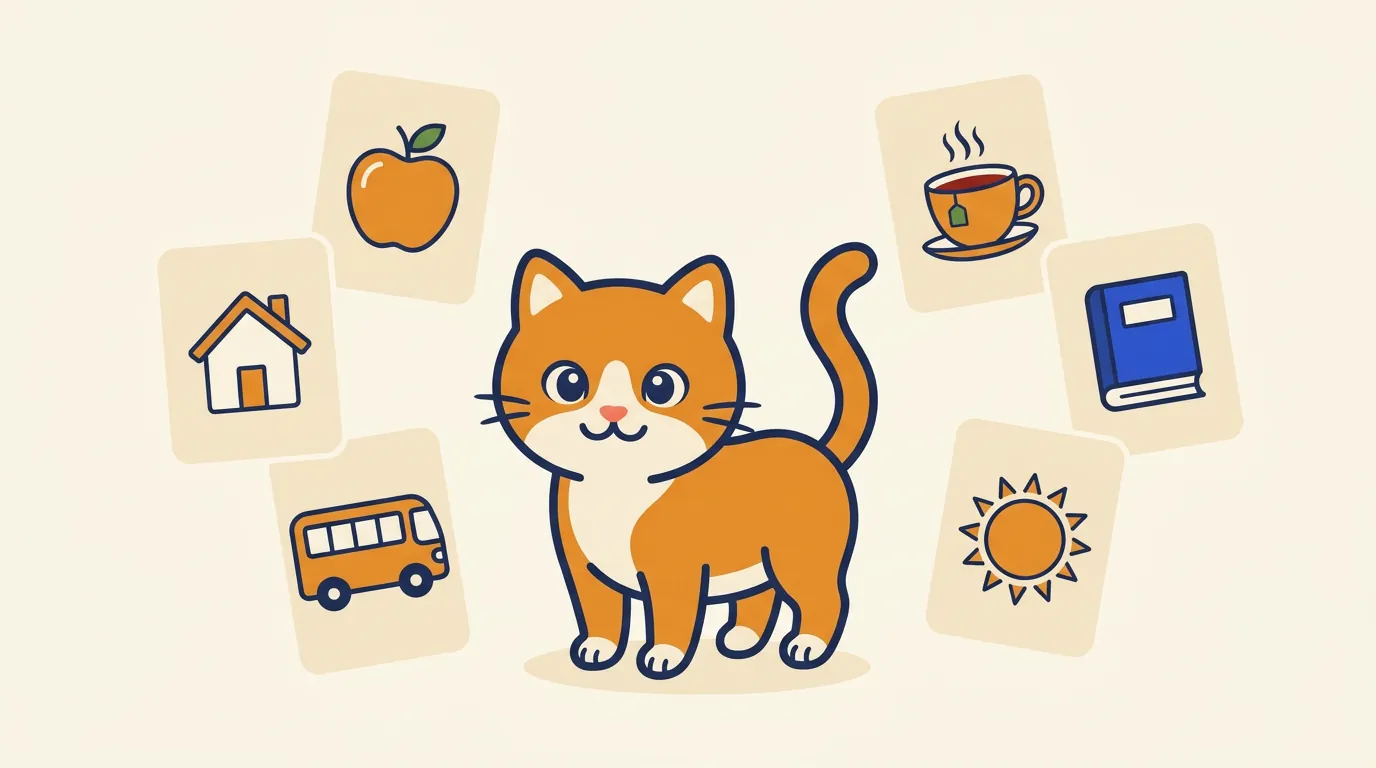
Learn these seven first: evet (eh-vet, yes), hayır (hah-yur, no), merhaba (mehr-hah-bah, hello), lütfen (lewt-fen, please), teşekkürler (teh-shek-kewr-ler, thanks), var (there is) and yok (there isn't). Add the question words and about twenty verbs, and you can already ask for things and answer simple questions in a shop or café.
I've grouped the 100 words below by theme instead of frequency, because one theme is easier to get through in a single sitting. Together they cover the kind of A1 tasks the Council of Europe's CEFR describes: introducing yourself and handling basic everyday needs. Spellings and meanings follow the TDK Güncel Türkçe Sözlük. If you can't read the letters yet, start with the Turkish alphabet and pronunciation.
The 10 essentials
| Turkish | Say it like | English |
|---|---|---|
| evet | eh-vet | yes |
| hayır | hah-yur | no |
| tamam | tah-mahm | okay |
| lütfen | lewt-fen | please |
| teşekkürler | teh-shek-kewr-ler | thanks |
| merhaba | mehr-hah-bah | hello |
| pardon | par-don | sorry, excuse me |
| var | var | there is, I have |
| yok | yohk | there isn't, I don't have |
| değil | deh-eel | not |
Var and yok do the job of both "there is" and "have". Ask Su var mı? (Is there water?) and the answer comes back as Var or Yok. A learner who answers Evet will be understood, but it sounds like a translation. Değil is the word that negates nouns and adjectives: Pahalı değil (it's not expensive).
Pronouns and question words
| Turkish | Say it like | English |
|---|---|---|
| ben | ben | I |
| sen | sen | you (one friend) |
| o | oh | he, she, it |
| biz | beez | we |
| siz | seez | you (polite, or plural) |
| onlar | on-lar | they |
| ne | neh | what |
| kim | keem | who |
| nerede | neh-reh-deh | where |
| ne zaman | neh zah-mahn | when |
| nasıl | nah-sul | how |
| neden | neh-den | why |
| kaç | kahch | how many, how much |
| hangi | hahn-gee | which |
One word, o, covers he, she and it. You'll also notice pronouns go missing a lot, because the verb ending already tells you who's doing the action: Geliyorum is "I'm coming" with no ben needed.
People
| Turkish | Say it like | English |
|---|---|---|
| anne | ahn-neh | mother |
| baba | bah-bah | father |
| kardeş | kar-desh | brother or sister |
| abla | ahb-lah | older sister |
| abi | ah-bee | older brother |
| arkadaş | ar-kah-dahsh | friend |
| çocuk | choh-jook | child |
| kadın | kah-dun | woman |
| adam | ah-dahm | man |
| öğretmen | ur-ret-men | teacher |
Don't be surprised to hear abla and abi used for strangers. People call someone a little older than themselves this way at the market or in a taxi.
Time
| Turkish | Say it like | English |
|---|---|---|
| bugün | boo-gewn | today |
| yarın | yah-run | tomorrow |
| dün | dewn | yesterday |
| şimdi | sheem-dee | now |
| sonra | son-rah | later, after |
| önce | urn-jeh | before, first |
| gün | gewn | day |
| hafta | hahf-tah | week |
| yıl | yul | year |
| saat | sah-aht | hour, clock, watch |
Day and month names are in days of the week and months in Turkish, and the clock is in Turkish numbers, time and prices.
Food and drink
| Turkish | Say it like | English |
|---|---|---|
| su | soo | water |
| çay | chai | tea |
| kahve | kah-veh | coffee |
| ekmek | ek-mek | bread |
| et | et | meat |
| tavuk | tah-vook | chicken |
| peynir | pay-neer | cheese |
| meyve | may-veh | fruit |
| kahvaltı | kah-vahl-tuh | breakfast |
| hesap | heh-sahp | the bill |
Places and things
| Turkish | Say it like | English |
|---|---|---|
| ev | ev | home, house |
| okul | oh-kool | school |
| iş | eesh | work, job |
| yol | yol | road, way |
| şehir | sheh-heer | city |
| oda | oh-dah | room |
| hastane | hahs-tah-neh | hospital |
| tuvalet | too-vah-let | toilet |
| para | pah-rah | money |
| telefon | teh-leh-fon | phone |

20 verbs you'll use every day
Dictionaries list verbs with -mak or -mek on the end. Drop that ending and you have the informal command: gelmek (to come) becomes Gel! (Come!).
| Verb | Command (sen) | English |
|---|---|---|
| olmak | ol | to be, become |
| gitmek | git | to go |
| gelmek | gel | to come |
| yapmak | yap | to do, make |
| etmek | et | to do (in pairs: yardım et, help) |
| istemek | iste | to want |
| bilmek | bil | to know |
| anlamak | anla | to understand |
| konuşmak | konuş | to speak |
| söylemek | söyle | to say |
| görmek | gör | to see |
| almak | al | to take, buy |
| vermek | ver | to give |
| yemek | ye | to eat (also "food, meal") |
| içmek | iç | to drink |
| sevmek | sev | to love, like |
| beklemek | bekle | to wait |
| çalışmak | çalış | to work, study |
| oturmak | otur | to sit, live (somewhere) |
| bakmak | bak | to look |
With strangers you'll want the polite form, which adds -in or -ın depending on vowel harmony: Bekleyin (please wait), Bakın (look).
Adjectives
| Turkish | Say it like | English |
|---|---|---|
| iyi | ee-yee | good |
| kötü | kur-tew | bad |
| büyük | bew-yewk | big |
| küçük | kew-chewk | small |
| güzel | gew-zel | beautiful, nice |
| yeni | yeh-nee | new |
| sıcak | suh-jahk | hot |
| soğuk | soh-ook | cold |
| pahalı | pah-hah-luh | expensive |
| kolay | koh-lie | easy |
Six small words that hold sentences together
| Turkish | Say it like | English |
|---|---|---|
| ve | veh | and |
| ile | ee-leh | with |
| çok | chohk | very, a lot |
| biraz | bee-rahz | a little |
| burada | boo-rah-dah | here |
| şey | shay | thing; "um" |
Formal and casual versions
Some of the words above have a more formal or a more relaxed partner.
| Meaning | Formal | Neutral | Casual |
|---|---|---|---|
| thank you | teşekkür ederim | teşekkürler | sağ ol |
| excuse me | affedersiniz | pardon | pardon |
| here you are, go ahead | buyurun | buyurun | buyur |
| okay | tamam | tamam | tamamdır |
| yes | evet | evet | he / aynen |
| you | siz | siz | sen |
Stick to the formal or neutral column with shop staff, officials and anyone older. Aynen (exactly) is something friends say to each other constantly. For replies to thanks such as rica ederim, see how to say thank you in Turkish, and for greetings see Turkish greetings and everyday phrases.
Garson: Merhaba, buyurun. Müşteri: Merhaba. Bir çay, lütfen. Peynirli tost var mı? Garson: Var. Müşteri: Tamam, bir tost da. Sonra hesap, lütfen. Garson: Tabii. Başka bir şey? Müşteri: Yok, teşekkürler.
A: Bu kim? B: Arkadaşım Elif. Öğretmen. A: Memnun oldum. Nerede çalışıyorsun? B: Burada, yeni okulda.
Pronunciation tips for English speakers
- Every letter is pronounced, and each one has a single sound. Saat has two clear as: sah-aht.
- C is "j" and ç is "ch": çocuk is choh-jook.
- Dotless ı is a short, unrounded "uh", as in hayır, kadın, yıl and pahalı. Say "ee" there and you've changed the word.
- Ö and ü are rounded vowels, like German ö and ü: öğretmen, gün, küçük.
- Ğ has no consonant sound of its own. It lengthens or links the vowels around it, so değil comes out close to deh-eel and soğuk to soh-ook.
Common mistakes
- Answering Su var mı? with Evet. Say Var, or Yok if there isn't any.
- Using hayır for "not": Pahalı hayır is wrong; it's Pahalı değil.
- Saying sen to a stranger. Start with siz and wait for the other person to switch.
- Putting ben in every sentence. Ben geliyorum means "I am coming", with the stress on you; most of the time Geliyorum is all you need.
- Reading çay as "kai" or şey as "sey". The cedilla changes the sound.
Frequently asked questions
How many Turkish words do I need to start speaking?
Nobody can give you a fixed number. A hundred well-chosen words plus var, yok, değil and the question words get you through a lot of basic A1 exchanges. After that, pick up the words your own week needs: your job, your neighbourhood, what you buy at the market.
Is "yemek" a noun or a verb?
Both. Yemek is "to eat" and also "food" or "a meal". Yemek yemek (to eat a meal) is a normal Turkish phrase.
What does "şey" mean?
Şey means "thing", and Turks also use it as a filler while they think, like "um" in English: Şey... yarın gelir misin?
A list only gets you halfway. The words stick once you've had to use them with someone who answers back. If you'd like that someone to be a teacher, take the free level test and then book a free trial lesson with Ceylan, a native speaker who can explain things in English when Turkish isn't enough yet.
 Everyday TurkishDays of the Week and Months in Turkish, With SoundThe seven Turkish days (Pazartesi to Pazar) and twelve months (Ocak to Aralık) with pronunciation, seasons, how to say dates, and 'on Monday'.
 Everyday TurkishHello in Turkish: Merhaba Meaning, Selam and RepliesHello in Turkish is merhaba (mehr-hah-bah), a greeting from Arabic. Learn selam, günaydın and iyi günler, formal vs casual use, and how to reply.
 Everyday TurkishHow to Say Thank You in Turkish, and How to ReplyThank you in Turkish is teşekkür ederim (teh-shek-kewr eh-deh-rim). Also teşekkürler, sağ ol and eyvallah, and how to reply with rica ederim.
 Everyday TurkishI Love You in Turkish: Seni Seviyorum and Love WordsI love you in Turkish is seni seviyorum (seh-nee seh-vee-yoh-room). Learn how to reply, terms of endearment like canım and aşkım, and romantic phrases.
 Everyday TurkishSpoken Turkish vs Written Turkish: How People Really TalkWhy street Turkish sounds unlike your textbook: contractions like napıyon and geliyom, dropped sounds, fillers like yani and şey, and when to avoid them.
 Everyday TurkishTurkish Cases Explained: 6 Endings and the Accusative TrapTurkish has six cases: nominative, accusative, dative, locative, ablative and genitive. What each one means, how the endings change, and when to use -ı.