
Days of the Week and Months in Turkish, With Sound
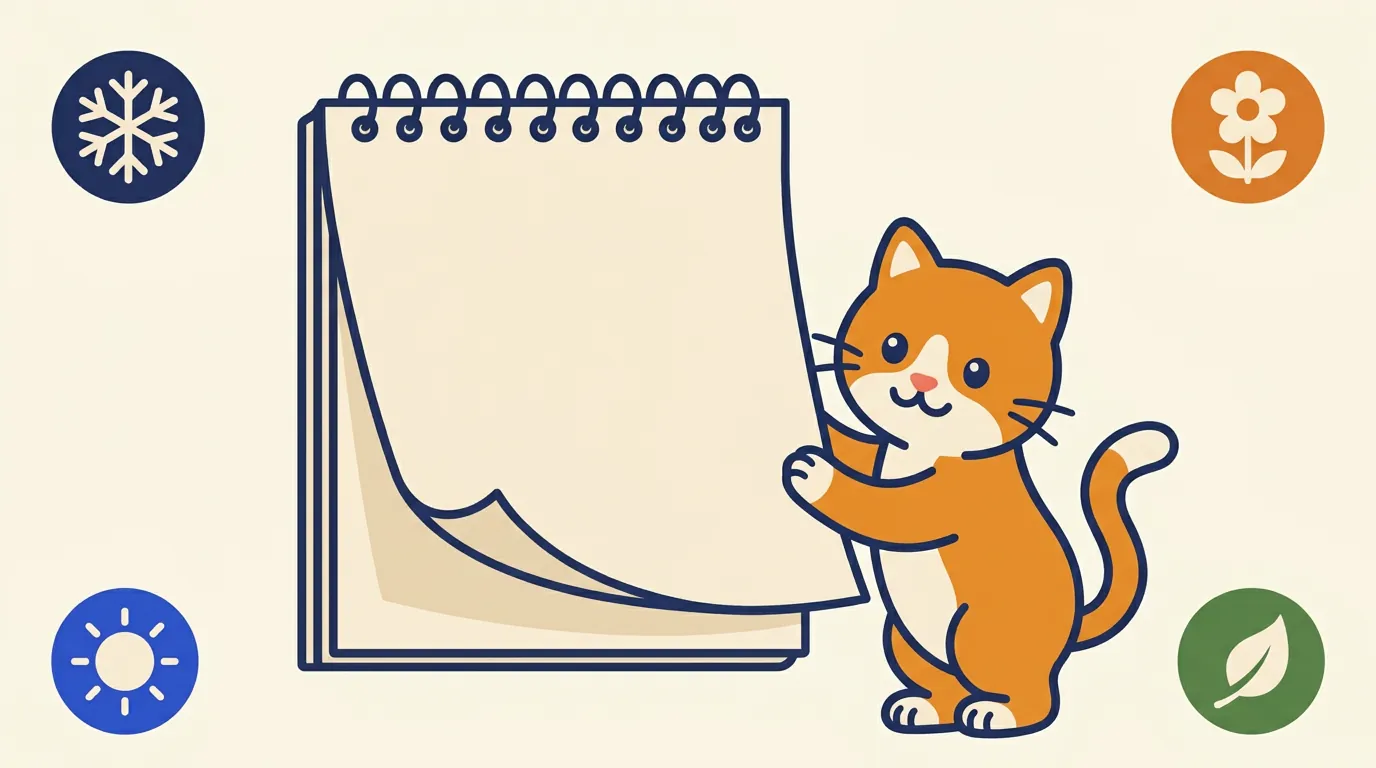
The Turkish week starts on Monday: Pazartesi (pah-zar-teh-see), then Salı (sah-luh), Çarşamba (char-sham-bah), Perşembe (pehr-shem-beh), Cuma (joo-mah), Cumartesi (joo-mar-teh-see) and Pazar (pah-zar, Sunday). The months, January to December, are Ocak, Şubat, Mart, Nisan, Mayıs, Haziran, Temmuz, Ağustos, Eylül, Ekim, Kasım and Aralık.
You'll have the names down in a day or two. "On Monday" and "in May" take longer, since Turkish puts an ending on the word where English adds a preposition. If letters like ş, ı or ğ are still new to you, keep the Turkish alphabet and pronunciation guide open in another tab.
The days of the week
| Turkish | Say it like | English | Short form |
|---|---|---|---|
| Pazartesi | pah-zar-teh-see | Monday | Pzt |
| Salı | sah-luh | Tuesday | Sal |
| Çarşamba | char-sham-bah | Wednesday | Çar |
| Perşembe | pehr-shem-beh | Thursday | Per |
| Cuma | joo-mah | Friday | Cum |
| Cumartesi | joo-mar-teh-see | Saturday | Cmt |
| Pazar | pah-zar | Sunday | Paz |
It helps to know how the names were built. Pazar is from the Persian word for market, and **Pazartesi is pazar ertesi, "the day after market day"**. Cuma is from the Arabic word for gathering, which makes Cumartesi "the day after Friday". Çarşamba and Perşembe come from Persian "fourth day" and "fifth day", and Salı comes from Arabic (Nişanyan Sözlük traces each one).
The short forms are what you'll see in calendars and phone apps. A few more words you'll use alongside the days:
| Turkish | English |
|---|---|
| gün | day |
| hafta | week |
| hafta içi | weekdays |
| hafta sonu | weekend |
| bugün / dün / yarın | today / yesterday / tomorrow |
| öbür gün | the day after tomorrow |
| geçen hafta / gelecek hafta | last week / next week |
The months of the year
| Turkish | Say it like | English |
|---|---|---|
| Ocak | oh-jahk | January |
| Şubat | shoo-baht | February |
| Mart | mart | March |
| Nisan | nee-sahn | April |
| Mayıs | mah-yus | May |
| Haziran | hah-zee-rahn | June |
| Temmuz | tem-mooz | July |
| Ağustos | aa-oos-tos | August |
| Eylül | ay-lewl | September |
| Ekim | eh-keem | October |
| Kasım | kah-sum | November |
| Aralık | ah-rah-luk | December |
Four of the names are younger than the rest. Ekim, Kasım, Aralık and Ocak replaced the Ottoman Teşrinievvel, Teşrinisani, Kanunuevvel and Kanunisani in 1945, under Law No. 4696 passed by the Turkish parliament. Ekim means "sowing", and Aralık means "gap" or "in between".
The four seasons
| Turkish | Say it like | English | "In ..." |
|---|---|---|---|
| ilkbahar (or bahar) | eelk-bah-har | spring | ilkbaharda |
| yaz | yahz | summer | yazın |
| sonbahar | son-bah-har | autumn | sonbaharda |
| kış | kuhsh | winter | kışın |
The last column is where learners slip. **"In summer" and "in winter" are yazın and kışın**; yazda and kışta sound wrong to a Turkish ear. Spring and autumn behave normally with the locative: ilkbaharda, sonbaharda. Season itself is mevsim.
How to say "on Monday" and "in May"
Days, months and seasons each have their own pattern.
For a day, add günü: pazartesi günü is "on Monday". You can drop günü in speech (Pazartesi geliyorum, I'm coming on Monday), but the version with günü sounds complete and is never wrong. For a habit, use the plural: pazartesileri means "on Mondays".
Months take the locative ending -da/-de/-ta/-te: mayısta (in May), ekimde (in October), ağustosta (in August). The ending follows vowel harmony, and it turns into -ta/-te after a hard consonant such as s, t or ş. Once a specific date is attached, the month gets a capital and an apostrophe: 5 Mayıs'ta (on 5 May).
Seasons use the forms in the table above.
| You want to say | Turkish |
|---|---|
| on Friday | cuma günü |
| on Fridays | cumaları |
| this Friday | bu cuma |
| next Friday | haftaya cuma / gelecek cuma |
| last Friday | geçen cuma |
| until Friday | cumaya kadar |
| in June | haziranda |
| at the end of June | haziran sonunda |
| in winter | kışın |
Dates: the day comes first
Turkish dates go day, month, year, with plain numbers and no "th". 2 Kasım 2026 is read iki Kasım iki bin yirmi altı. In figures you'll see 2.11.2026. To say something happens on a date, the ending goes on the month: 12 Ekim'de (on 12 October). The numbers themselves are in Turkish numbers, time and prices.
Capitals depend on context, according to TDK. Day and month names that refer to a specific date start with a capital, as in 29 Ekim 1923 or 2 Kasım 2026 Pazartesi. In general use they are lowercase: her pazartesi (every Monday), eylülde okullar açılır (schools open in September).
Formal, everyday and casual forms
The day and month names stay the same in every register. What changes is the phrasing around them.
| Register | Example | Where you'll see it |
|---|---|---|
| Formal, written | 12.11.2026 Perşembe, saat 14.30 | appointments, official letters, tickets |
| Everyday speech | on iki Kasım perşembe günü | phone calls, the doctor's reception |
| Casual | perşembe, iki buçukta | friends, messages |
| Messages | Per, Cmt, Pzt | quick texts and calendar entries |
How to ask and how to reply
| Question | Meaning | A natural reply |
|---|---|---|
| Bugün günlerden ne? | What day is it today? | Bugün salı. |
| Bugün ayın kaçı? | What's the date today? | Bugün ayın ikisi. / İki Kasım. |
| Ne zaman? | When? | Cuma günü. |
| Doğum günün ne zaman? | When is your birthday? | Beş Mayıs'ta. |
| Hangi gün müsaitsiniz? | Which day are you free? (polite) | Çarşamba olur mu? |
A: Toplantı ne zaman? B: Perşembe günü, saat onda. A: Bu perşembe mi, haftaya perşembe mi? B: Haftaya. On iki Kasım'da. A: Tamam, not aldım.
A: Tatile ne zaman gidiyorsunuz? B: Temmuzda, ama ağustosta da birkaç gün izin alacağım. A: Yazın İstanbul çok sıcak oluyor. B: Evet, o yüzden kışın gitmeyi düşünüyoruz.
Pronunciation tips for English speakers
- C is always "j" and Ç is "ch": Cuma is joo-mah, never koo-mah, and Çarşamba starts like "church".
- Ş is "sh", so Perşembe and Şubat are easy once you see the cedilla.
- Dotless ı is the vowel in the second syllable of "cousin", said with unrounded lips. Salı, Mayıs, Kasım and Aralık all have it, and a clear "ee" in its place is the most common giveaway of an English accent.
- Ğ isn't pronounced as a consonant. In Ağustos it just lengthens the a, giving aa-oos-tos.
- Ü in Eylül is the French u or German ü: say "ee" with rounded lips.
- Double consonants are held: Temmuz has a longer m than "Tem-uz".
Common mistakes
- Using ordinals in dates. İkinci Kasım is wrong; say iki Kasım.
- Saying yazda or kışta instead of yazın and kışın.
- Capitalizing every month and day. TDK writes mayısta and her pazartesi in lowercase, and keeps the capital and apostrophe for a specific date: 5 Mayıs'ta.
- Mixing up Pazar (Sunday) and Pazartesi (Monday), especially when someone speaks fast. Listen for -tesi at the end.
- Putting the month before the day, as in American English. Kasım 2 sounds wrong; say 2 Kasım.
Frequently asked questions
What is the first day of the week in Turkey?
Monday. Calendars start with Pazartesi, and the working week runs from Pazartesi to Cuma. Cumartesi and Pazar make up the hafta sonu (weekend).
Do you capitalize days and months in Turkish?
Only sometimes. TDK capitalizes them when they name a specific date, as in 15 Mayıs 2027 Cumartesi. In general sentences such as her cumartesi or mayısta hava güzel olur, they stay lowercase.
Is "Pazartesi" or "Pazartesi günü" correct?
Both are correct. Pazartesi günü is the full form and works everywhere. In casual speech people often drop günü: Pazartesi görüşürüz (see you on Monday).
How do I say "next month" and "last month"?
Gelecek ay or önümüzdeki ay is next month, and geçen ay is last month. Bu ay is this month.
The first real test usually comes when you book an appointment by phone and have to understand a date said at full speed. You can practise exactly that with Ceylan, Turkly's teacher. See your level with the free test, then book a free trial lesson and pick a day for it, in Turkish if you're brave.
 Everyday Turkish100 Common Turkish Words, With Pronunciation100 useful Turkish words in themed tables: basics, people, time, food, places, 20 key verbs and adjectives, with pronunciation and common mistakes.
 Everyday TurkishHello in Turkish: Merhaba Meaning, Selam and RepliesHello in Turkish is merhaba (mehr-hah-bah), a greeting from Arabic. Learn selam, günaydın and iyi günler, formal vs casual use, and how to reply.
 Everyday TurkishHow to Say Thank You in Turkish, and How to ReplyThank you in Turkish is teşekkür ederim (teh-shek-kewr eh-deh-rim). Also teşekkürler, sağ ol and eyvallah, and how to reply with rica ederim.
 Everyday TurkishI Love You in Turkish: Seni Seviyorum and Love WordsI love you in Turkish is seni seviyorum (seh-nee seh-vee-yoh-room). Learn how to reply, terms of endearment like canım and aşkım, and romantic phrases.
 Everyday TurkishSpoken Turkish vs Written Turkish: How People Really TalkWhy street Turkish sounds unlike your textbook: contractions like napıyon and geliyom, dropped sounds, fillers like yani and şey, and when to avoid them.
 Everyday TurkishTurkish Cases Explained: 6 Endings and the Accusative TrapTurkish has six cases: nominative, accusative, dative, locative, ablative and genitive. What each one means, how the endings change, and when to use -ı.